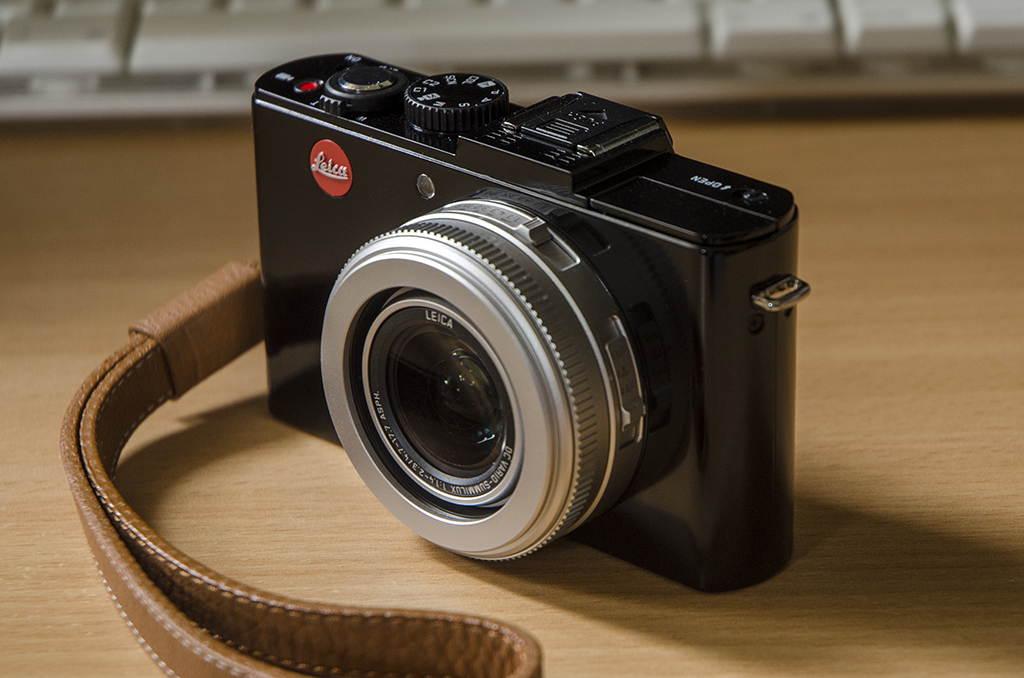
I’ve always wanted a Leica camera

LeicaI’ve been an SLR camera guy for as long as I can remember. Ever since I bought my first camera back and lens – a Ricoh KR10 with a 50mm lense – I’ve relied on the control and quality a good SLR provides. The downside of an SLR is the bulk of the camera and various lenses – my current camera bag weighs around 6kgs. There is nothing subtle about taking the camera out for the evening and nothing subtle about using it.

I’ve always wanted a compact camera that could go anywhere, which still took great pictures, and which gave me the ability to control things like depth of field and shutter speed.

I’ve also always wanted a Leica camera but have always been put off by the prices – particularly in New Zealand.

The opportunity to get both came my way when we stopped to browse at the Leica shop at Hong Kong airport. Leica’s range of compact cameras have always got good reviews and their latest mid range compact – the D-Lux 6 – has been no exception. And there sitting in the display cabinet was one calling my name.

Now the geeks among my readers will know that the D-Lux 6 is essentially the same camera as the Panasonic Lumix DMC-LX7. There are some minor cosmetic changes – like the addition of the round red Leica logo – but the cameras are one in the same. Leica have been working with Panasonic for years, using Panasonic’s hardware but then writing their own software to control image capture and processing.

This is where the two camera’s differ and the results are impressive. In fact it’s almost impossible to tell the difference between a shot taken on the Leica and a shot taken on my Nikon DSLR.

The Leica version of this camera carries a price premium but it seems worth it – for the added image quality as well as that small red circle on the front.

A Sicilian sunset

Sicilean sunsetThe view beyond our pool and out over the olive grove was enhanced on Thursday night by a spectacular sunset.


A post for geeks

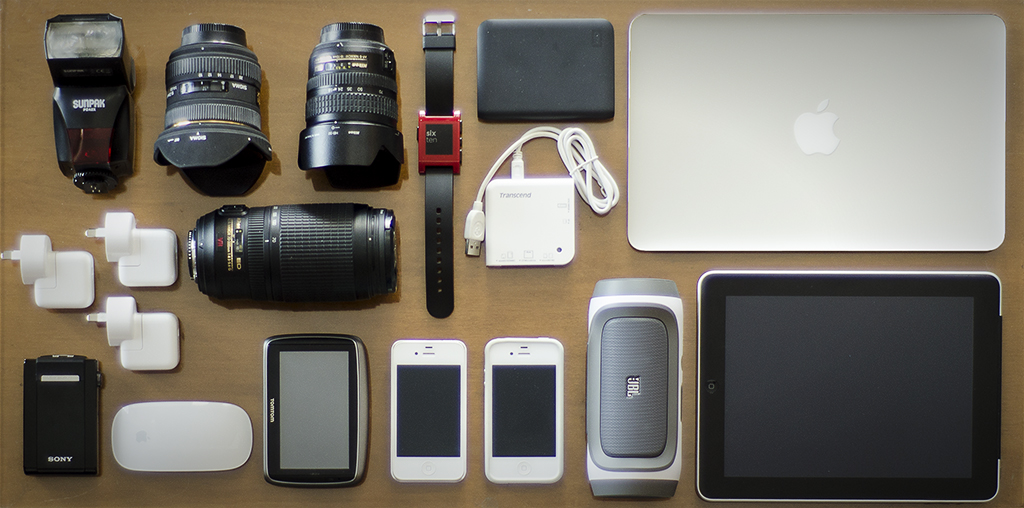
Tech DisplayIn the old days the only technology we took on holiday was a still camera and maybe a video camera. These days that’s all changed and our bags are full of various bits of tech.

This trip we tried to minimise what we took but still ended up with a fair collection of things – as can be seen in the photo. The only piece of technology not shown is the camera I took this shot with – a Nikon D7000 with a 50mm 1.8 fixed lens.

Clockwise from top left – Sunpak PZ42X flash gun, Sigma 10-20mm wide angle lens, Nikon 18-70mm zoom Lens, Pebble smart watch, WD 500GB portable hard drive, Transcend multi card reader, MacBook Air – 11.6 inch, iPad, JBL Charge bluetooth portable speaker, 2 x iPhone 4S, TomTom GPS, Apple mouse, Sony T500 camera, Nikon 70-300mm zoom Lens and 3 iPad and iPhone chargers. Not included are all the cables that connect this stuff together and various charges for camera batteries.

Nothing like travelling light I say.


In praise of fixed focal length lenses

From the headline you can tell this post is going to be a bit geeky. And if you’re not interested in photography, it could be boring as well. Be warned.

A few weeks ago I purchased my first ever fixed focal length lens. It was a AF Nikkor 50mm 1.8D which is a lens Nikon have been making for the best part of 10 years in one guise or another.

It cost me the princely sum of $85 as it was second hand but in “near new” condition. The previous owner had his Nikon camera stolen a week after buying the lens. He didn’t replace the camera so the lens had been used only once. (No seriously, I believe what people write about stuff on Trade Me.)

Up until now I’ve always been a zoom lens guy. I love the flexibility of a good zoom lens and the ability to frame things as I like without having to rush towards or away from the subject. In fact I didn’t really see the need for a fixed length lens at all.

Recently I was watching the excellent video blog The Art of Photography and the host was extolling the sharpness of prime lenses and the discipline required to use them. The need to move around to frame the subject – sometimes to get in close and sometimes to back off.

And now after a few weeks with the 50mm lense I’m sold. The sharpness of this cheap little lens is amazing. The ability to accurately control depth of field is amazing and the 1.8 f-stop means photos can be taken in low light without any risk of the dreaded camera shake or resorting to flash.

If you don’t have a prime 50mm or 35mm lens in your camera bag, trust me, get one.

Red sky at night …

Red sky at night ...… a shepherd’s delight – or so the old saying goes.

Earlier this evening the sky over Wellington was delighting more than just passing shepherds. Not only was it glowing red but also yellow, pink, orange and some colour that might be called cerise.

After a glorious and calm summer’s day (I can say that as December is officially summer) the sun put on a fantastic light show to entertain us as it dropped slowly below the western horizon.